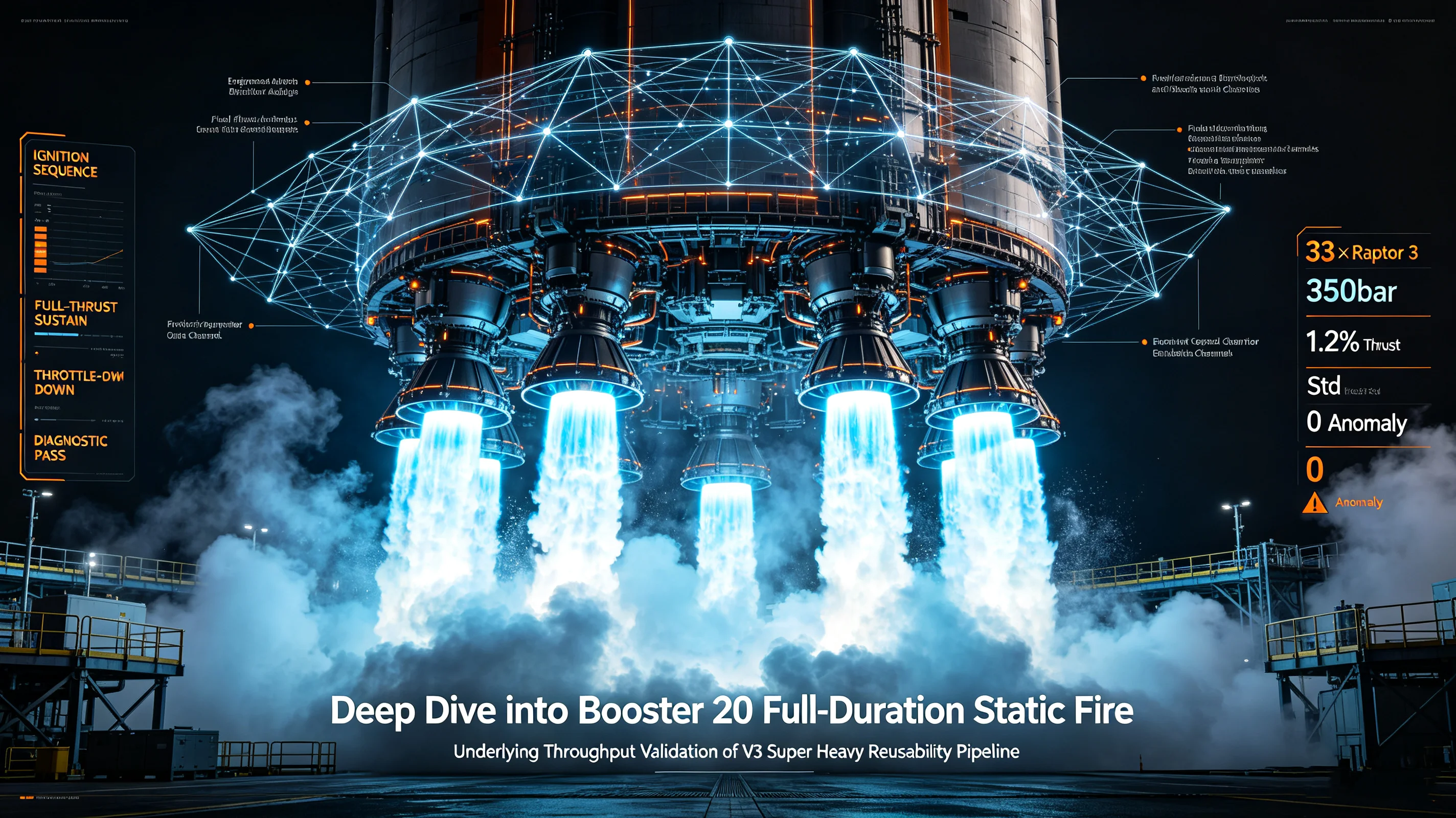
As AI large language models advance at breakneck speed, global tech competition has long centered on computing power upgrades. Major tech giants are pouring massive capital into expanding super data centers, stockpiling high-end GPUs, and optimizing algorithmic frameworks to secure a leading edge in the AI era. While the entire industry is scrambling to iterate and upgrade terrestrial computing infrastructure, SpaceX has put forward a groundbreaking concept that subverts traditional industry logic: relocating AI data centers to Earth’s orbit to build an outer-space computing network.
SpaceX has recently unveiled the complete design of its first AI computing satellite, AI 1, further clarifying its core strategic vision: constructing orbital data centers composed of massive in-orbit computing nodes. Far from being a superficial marketing gimmick, this initiative represents Musk’s forward-looking judgment on the inevitable evolution of AI infrastructure. The announcement has sparked heated debates across the global tech community. Some hail it as SpaceX’s most imaginative innovation since Starlink, while others dismiss it as another capital market narrative ahead of the company’s highly anticipated IPO. Regardless of divided opinions, one industry-wide dilemma has become increasingly evident: Earth’s energy and physical infrastructure are hitting hard limits for AI expansion.
Energy, Not Chips, Is the True Bottleneck of AI Development
There is a widespread public misconception that the shortage of high-end GPUs is the primary obstacle restricting AI iteration. In reality, for top tech firms including Google, Microsoft, and OpenAI, scarce energy resources constitute the fundamental barrier to large-scale AI commercialization.
Training advanced large-scale AI models requires tens of thousands of high-performance chips operating in parallel continuously. These massive computing clusters consume enormous amounts of electricity, alongside supporting resources such as large-scale cooling systems, water supplies, power transformation facilities, and substantial land assets. Every iteration of AI models brings a multiplicative surge in overall energy consumption.
According to authoritative industry estimates, global data center power consumption will reach 1,200 to 1,700 terawatt-hours by 2035, accounting for a significant share of total global power usage, with exploding AI computing demand serving as the core driving force behind this growth. This shift has rewritten the underlying rules of AI competition: while superficially a race of algorithms and models, modern AI competition has essentially evolved into a global scramble for energy and computing resources. Entities that secure stable, low-cost energy supplies can unlock larger-scale computing power and gain a decisive advantage in developing the next generation of super AI.
SpaceX’s Breakthrough: Solving Earth’s Energy Crunch via Orbital Computing
While the entire industry is fixated on expanding terrestrial power grids and optimizing energy-efficient computing technologies, SpaceX has broken free from conventional thinking to propose an unprecedented solution: decoupling AI computing from Earth’s constrained energy infrastructure and building infinitely sustainable orbital AI platforms.
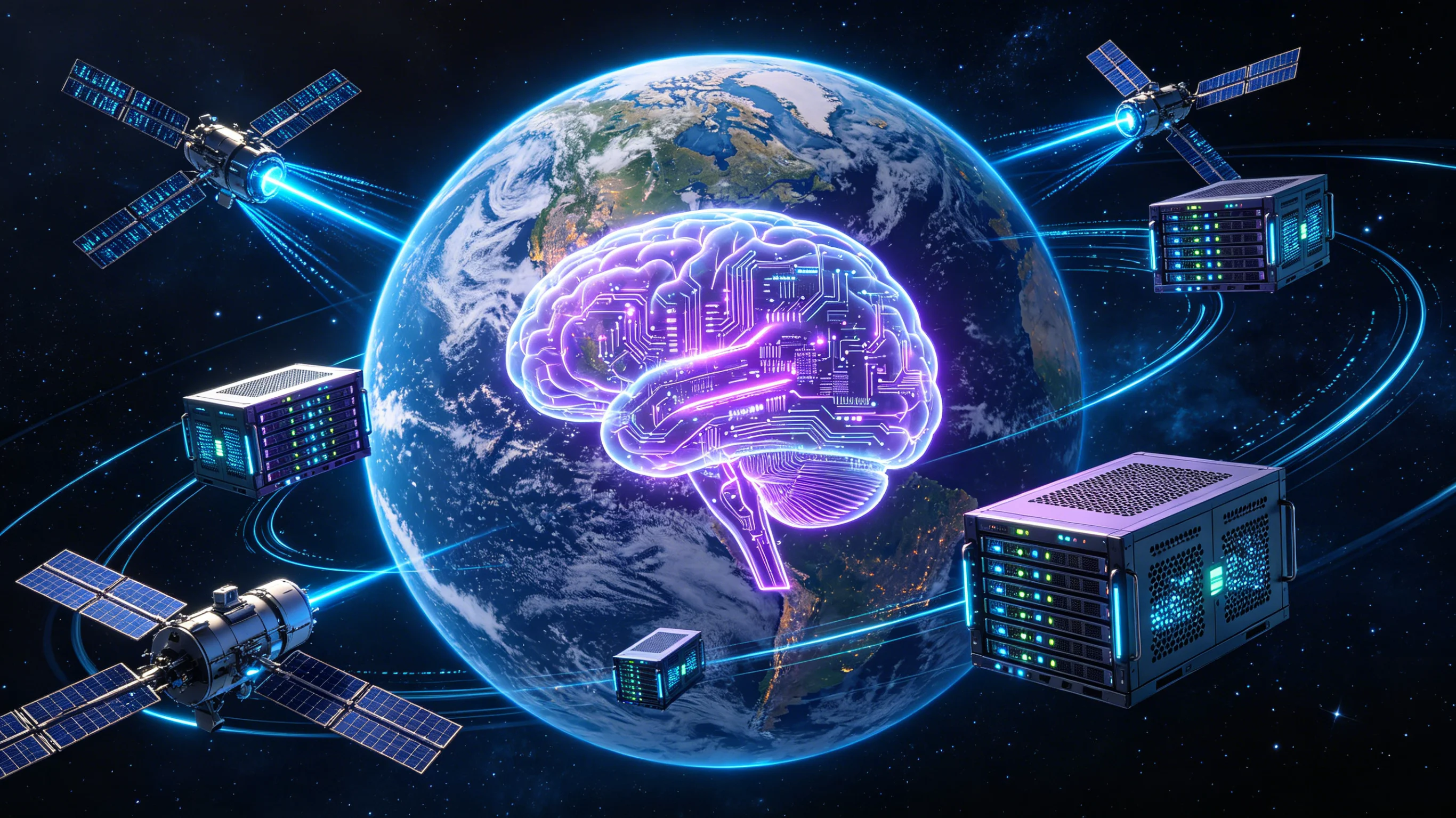
As Musk elaborated in recent public discussions, orbital data centers require no revolutionary or unproven black-box technologies. Most foundational capabilities are already embedded in the Starlink V3 system, ensuring technical feasibility for large-scale implementation. The newly revealed AI 1 satellite features a straightforward yet transformative design: operating in low Earth orbit, powered by sustainable solar energy, interconnected via laser inter-satellite links, and capable of completing end-to-end AI computing tasks in space.
Simply put, this device is not a conventional communication satellite but a floating space GPU server capable of persistent high-performance computing. Per SpaceX’s official data, a single AI 1 satellite delivers a sustained computing output of 120 kilowatts, with upgraded next-generation versions projected to reach 150 kilowatts. While the computing power of an individual satellite appears modest, its greatest value lies in infinite replicability and scalable rapid expansion.
Starlink’s development trajectory perfectly illustrates this potential. In 2019, a constellation of several hundred satellites was regarded as an industry milestone; by 2026, SpaceX’s in-orbit satellite count has surged to thousands. According to SpaceX’s long-term roadmap, the future orbital data center network aims to deploy up to millions of satellite nodes, forming a fully globalized space computing grid. Much like reusable rocket technology, which was once widely doubted before becoming an industry standard, orbital computing is steadily transitioning from science fiction to industrial reality.
Why Outer Space Outperforms Earth: Three Core Advantages for AI Computing
Common intuition suggests that space is a harsh, costly, and impractical environment for infrastructure deployment. However, for high-intensity AI computing operations, outer space offers irreplicable natural strengths that resolve the critical pain points of terrestrial data centers.
First is the energy advantage. Terrestrial data centers rely heavily on limited grid power and fossil fuel-generated electricity, facing persistent constraints such as regional power shortages and energy quota caps. In contrast, low-orbit satellites capture uninterrupted solar energy, eliminating the need for ground power plants and avoiding competition with civilian and industrial power consumption. This enables complete energy autonomy for orbital computing systems.
Second is the thermal dissipation advantage. Cooling systems account for over 30% of terrestrial data centers’ total operational costs. Traditional water and air cooling mechanisms consume massive amounts of electricity and water while facing inherent heat dissipation limits. The vacuum environment of space allows chip heat to dissipate directly through thermal radiation without bulky cooling equipment, drastically cutting operational costs while supporting long-duration, high-load AI computing tasks.
Third is the scalability advantage. Expanding terrestrial data centers involves cumbersome procedures including land approval, grid renovation, and on-site construction, resulting in long expansion cycles and numerous restrictive factors. Orbital computing networks operate like modular building blocks: additional computing capacity can be deployed simply by launching new satellites, delivering far faster and more flexible scalability than terrestrial infrastructure.
Building a Full Industrial Closed Loop: Musk Secures Dominance in AI’s Endgame
The AI 1 satellite and orbital data center initiative are not isolated product launches but pivotal components of Musk’s fully integrated space AI industrial ecosystem — a core competitive moat that differentiates SpaceX from traditional tech giants.
SpaceX has achieved full vertical integration across the entire industrial chain: its self-developed launch systems enable low-cost satellite deployment; Starlink’s laser mesh network provides global high-speed data transmission; xAI delivers cutting-edge large language model capabilities; and orbital data centers serve as the new-generation computing carrier. This forms a closed-loop ecosystem covering computing generation, data transmission, and AI model execution.
If bandwidth defined competition in the internet era, computing power has become the ultimate currency of the AI era. While traditional tech companies are confined to terrestrial cloud computing frameworks, SpaceX is fundamentally restructuring global computing infrastructure by building the world’s first space-based computing network. Unlike competitors pursuing fragmented technological breakthroughs, Musk’s end-to-end industrial layout grants him unparalleled initiative in the future AI landscape.
Challenges and Controversies: Orbital Computing Remains Unproven
Despite its transformative potential, the large-scale implementation of orbital data centers faces substantial practical challenges and industry skepticism. Astronomical experts warn that millions of orbital satellites will crowd low Earth orbit, exacerbating space debris pollution and posing severe risks to aerospace operations. From an engineering perspective, intense cosmic radiation and extreme temperature fluctuations in space interfere with high-precision computing chips, leading to far higher equipment attrition rates than terrestrial facilities.
Furthermore, the economic viability of space computing remains unvalidated. Exorbitant satellite launch and in-orbit maintenance costs have yet to prove competitive against mature terrestrial data center solutions. For this reason, most research institutions classify orbital computing as a long-term experimental direction for the next decade rather than a commercially viable industrial model.
The Fourth Infrastructure Shift: Ushering in a New AI Era
Reviewing the evolution of global computing infrastructure, the industry has undergone three pivotal transformations: from local terminal computing to centralized cloud computing, and further to distributed mobile AI cloud computing. Each iteration has reshaped the competitive landscape of technology. SpaceX’s ongoing shift from terrestrial to orbital computing represents the fourth revolutionary infrastructure upgrade.
While most tech firms remain immersed in superficial competition focused on model optimization and terrestrial computing expansion, Musk has transcended conventional boundaries to address the most fundamental question: what kind of infrastructure will power the next generation of super AI, and how can we break Earth’s energy and scale limitations?
Whether the AI 1 project achieves ultimate success remains uncertain, yet its industry signal is unambiguous: the endgame of AI competition no longer hinges merely on model performance, but on comprehensive rivalry over energy resources, computing power, and spatial infrastructure. As terrestrial computing infrastructure approaches its physical ceiling, low Earth orbit — just hundreds of kilometers above the planet’s surface — is poised to become the next frontier of the global AI revolution.
Transparency Disclosure: Content here is for informational guidance. This publication maintains editorial independence, though some links may generate affiliate revenue. For copyright inquiries or content removal, please reach out to our desk.