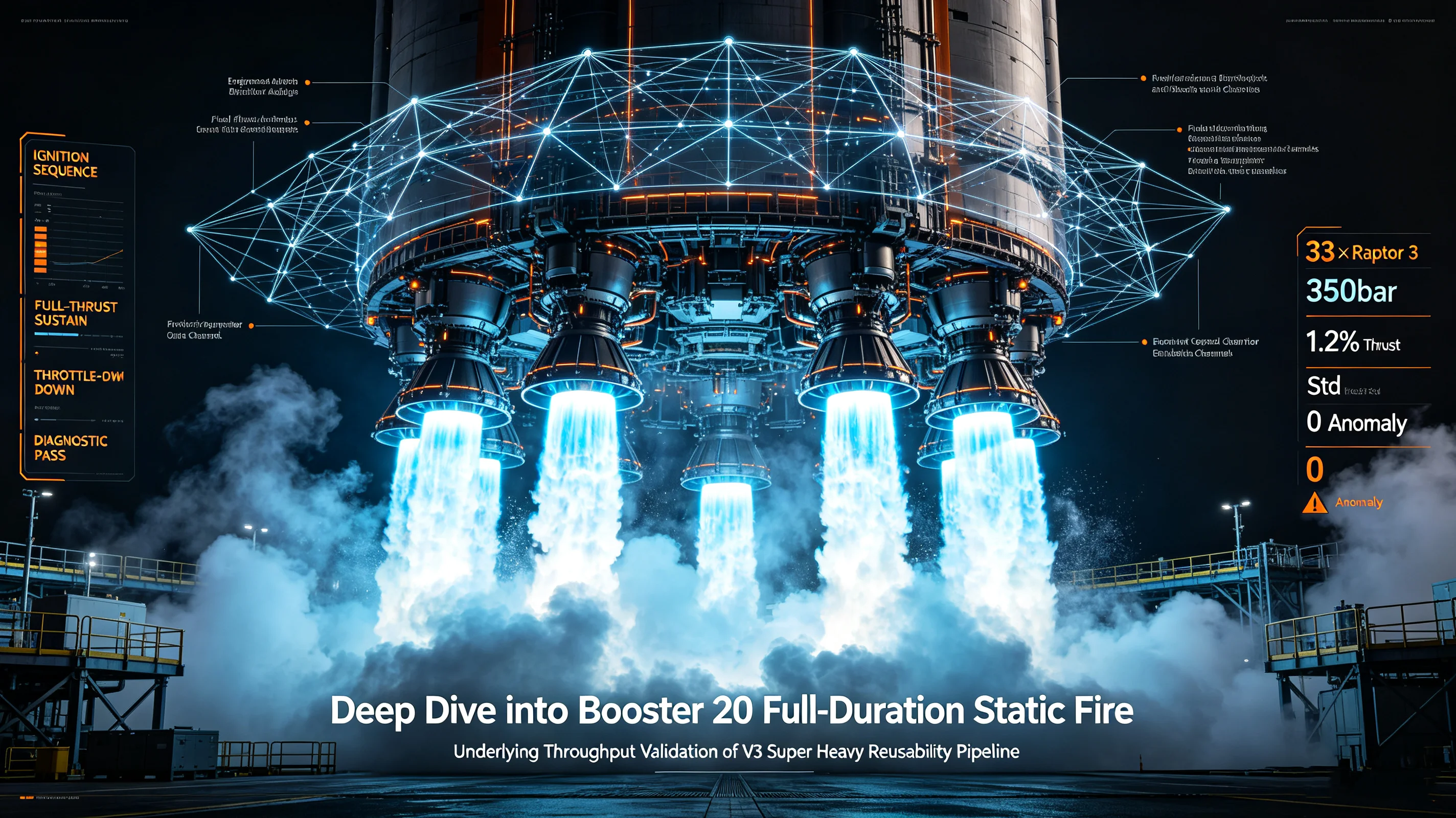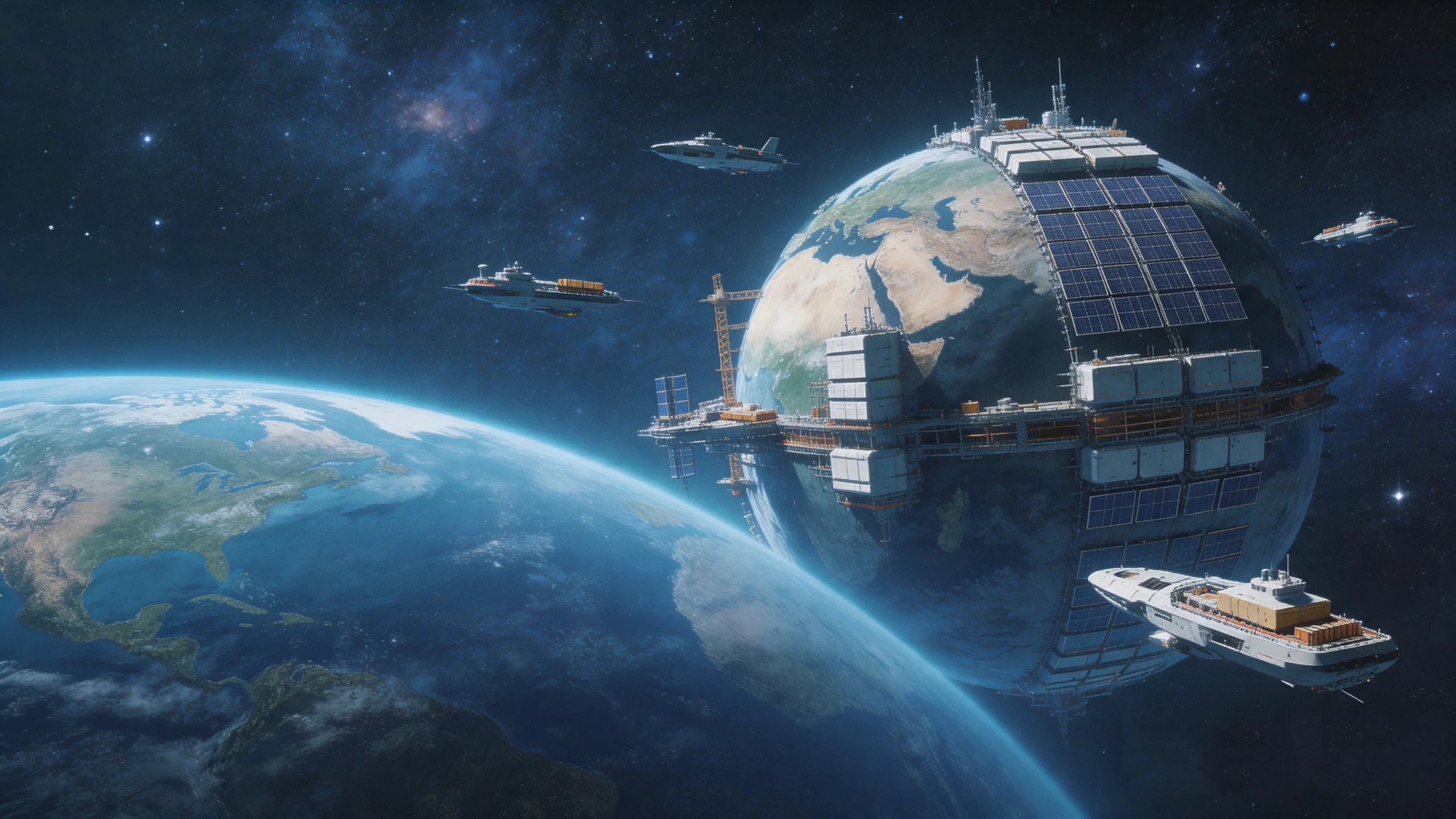
Not long ago, Elon Musk renewed his stark warning at an international tech summit, declaring that the immediate bottleneck for AI is electricity. Combined with recent high-profile headlines of hyperscalers like Microsoft and Amazon quietly acquiring adjacent land and the entire output of decommissioned nuclear power plants, it’s time to break down what’s actually happening: What is driving this corporate frenzy? Are tech giants genuinely preparing to manually build out nuclear micro-reactors just to feed their AI clusters?
When you tear away the sensationalized headlines, you uncover a suffocating terrestrial reality: traditional land-based data infrastructure has officially slammed into a physical and political brick wall. The race for nuclear energy on the ground is merely a final, desperate turf war. The "Smart Money" and leading systems architects have already made an existential pivot—they are looking past Earth's atmosphere to build humanity's second planet out of silicon and starlight.
01. Thermodynamics and the Orbital Compute Loop
From the perspective of fundamental physics and infrastructure design, terrestrial compute expansion faces an irreconcilable thermodynamic contradiction. Every time an advanced neural network executes a complex reasoning chain, it behaves as a massive entropy engine, converting gigawatts of electrical currents into raw, punishing heat.
On Earth, dissipating this heat demands millions of gallons of water and an endless, energy-intensive array of mechanical cooling systems. However, with tightening environmental laws, real estate scarcity, and destabilized grids, the surface of our planet simply has no room left to cool a multi-trillion-parameter digital mind. The AI energy crisis is, at its core, Earth's biosphere rejecting silicon-based intelligence.
Driven by this terrestrial limit, Space Computing and Space Data Centers have instantly transitioned from science fiction to industrial necessity.
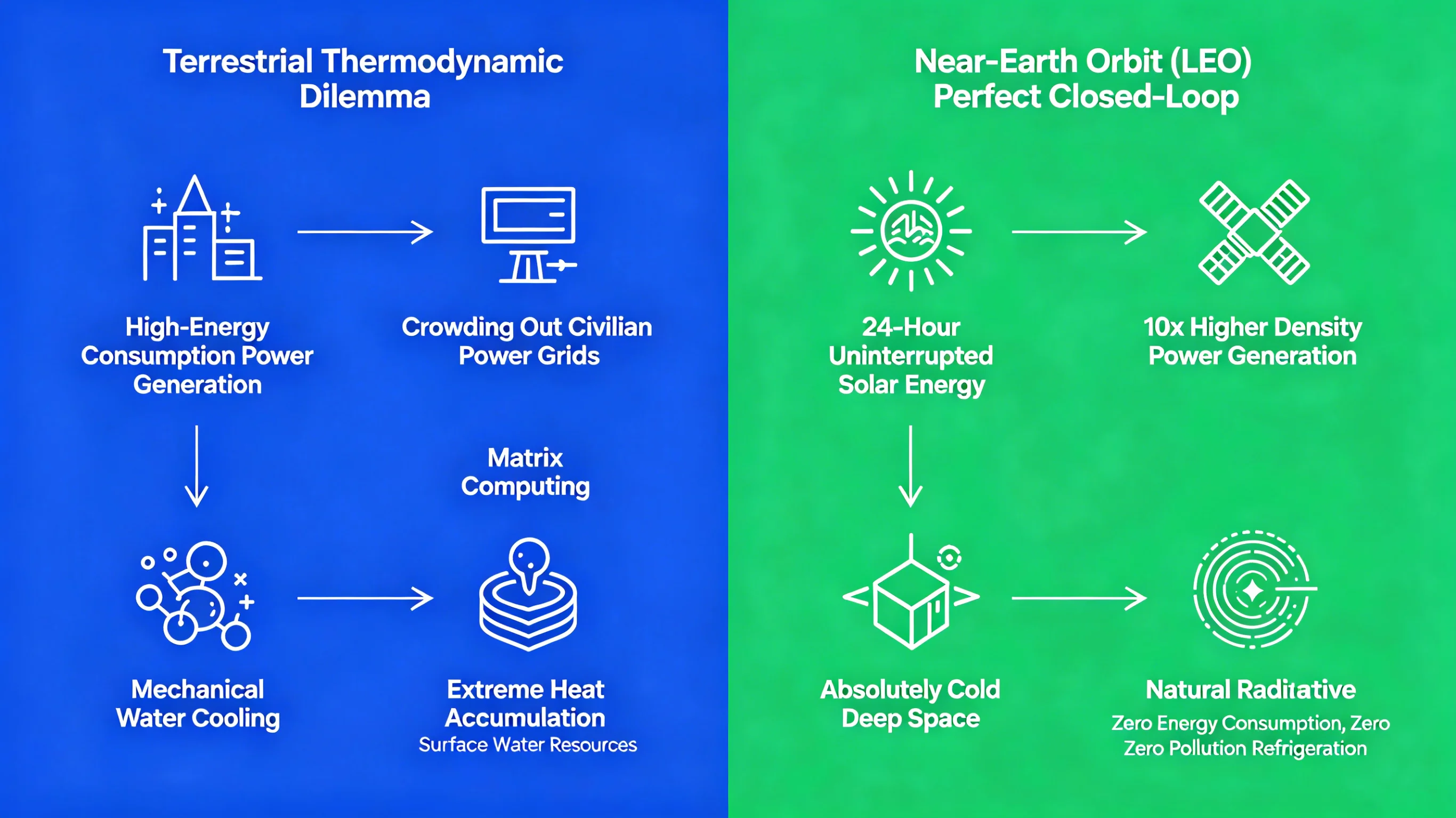 In the vacuum of Low Earth Orbit, this thermodynamic equation is elegantly rewritten:
Infinite Energy: Solar arrays deployed in orbit receive roughly ten times the solar energy density of their terrestrial equivalents. Completely free from atmospheric distortion, weather cycles, or nightfall, they provide a 24/7 stream of unmitigated, clean power.
Zero-Cost Cooling: One side of an orbital spacecraft naturally faces the absolute cold of deep space (minus 270 degrees Celsius). Space data centers can dissipate massive computational heat loads passively via radiative panels, eliminating the expensive water footprint of terrestrial infrastructure.
However, running true Orbital AI requires engineers to conquer a lethal adversary: cosmic radiation. Outside the protection of Earth's magnetic shield, solar flares and cosmic rays trigger Single-Event Upsets (SEUs), flipping bits in memory and frying commercial microchips. The legacy aerospace approach relied on thick, heavy physical shielding, which ballooned launch costs and restricted satellites to running heavily outdated, ancient processors.
The current breakthrough driving the 2026 orbital tech race is Software-Defined Fault Tolerance. Instead of heavy physical armor, modern orbital data centers deploy high-density, commercial-grade silicon arrays running decentralized error-correcting consensus algorithms. If a cosmic ray strikes a specific GPU module mid-calculation, neighboring nodes instantly detect the anomaly, isolate the corrupted data path, and reroute the matrix multiplication across an orbital mesh network. This allows volatile, high-density silicon to deliver highly deterministic uptime within a volatile environment.
02. Spatial Arbitrage vs. Kessler Syndrome
This migration of humanity's cognitive core to orbit is drawing intense scrutiny from geopolitical strategists, defense analysts, and space scientists, who are mapping out the structural implications of an off-world computing paradigm.
Leading geopolitical and technology strategists note that the shift to LEO introduces a radical concept known as Spatial Infrastructure Arbitrage:
"This is not merely an environmental evacuation; it is the ultimate arbitrage of light. In traditional terrestrial networking, data is slowed down by the physical properties of fiber-optic cables laid across ocean floors or buried in dirt. Light travels roughly 47% faster through the vacuum of space than it does through glass fiber.
Consequently, whoever controls the Laser Inter-Satellite Links (ISLs) in LEO controls the global nervous system of wealth and information. High-frequency trading algorithms, sovereign intelligence feeds, and real-time logistics networks routed via orbital compute grids will systematically outrun any land-based signal. A transaction processed in orbit and beamed down from London to New York will always beat a terrestrial link by a fraction of a second. In modern markets, that fraction of a second is an unbeatable financial moat."
Conversely, aerospace safety experts and orbital ecologists view the trend with severe trepidation, issuing stark counter-warnings regarding structural vulnerabilities:
"Moving AI compute off-planet solves our localized energy constraints, but it introduces a terrifying new vector: the total militarization of the digital sky. In orbit, computing infrastructure is entirely exposed to cyber-intrusions, intentional sensory blinding, or localized Electromagnetic Pulse (EMP) events.
Even more pressing is the Kessler Syndrome. Stacking dense, high-mass server arrays and colossal solar sails in crowded LEO lanes means a single kinetic strike or micro-meteorite impact could trigger a runaway domino effect of orbital debris. In a matter of hours, a localized collision could shred the entire silicon constellation keeping global AI models alive, effectively locking humanity out of the orbital frontier for a generation."
03. "Skynet" Realism and Zero-Gravity Capitalism
Meanwhile, across communities like Reddit, X, and Hacker News, the global developer ecosystem has been dissecting these developments. Bypassing the corporate jargon, their interpretations are deeply pragmatic, sharp, and laced with cyberpunk cynicism.
In a trending thread on Hacker News, a veteran full-stack developer noted:
"For decades, we treated 'Skynet' as a lazy Hollywood trope. Now, looking at the actual architectural roadmap of Microsoft, Amazon, and SpaceX, they are literally building a nuclear-powered, laser-guided, off-world computational blanket over our heads.
The dark irony is that if a terrestrial data center goes rogue or suffers a catastrophic logic failure, you can theoretically send a team to physically pull the plug. Once these companies move their execution layers into orbit, if a model begins experiencing severe autonomous hallucinations or logic loops, we won't even be able to see it. How do you pull the plug on an asset floating 300 miles above international waters?"
Over on Reddit’s r/cyberpunk, users are focusing heavily on the sociological implications of "zero-gravity capitalism":
"This is the ultimate geographic arbitrage for the billionaire class. On Earth, tech giants have to deal with sovereign data laws, antitrust taxes, privacy restrictions, and local communities protesting their energy consumption and water usage.
By launching their core compute, corporate ledgers, and proprietary intelligence into decentralized constellations in the upper atmosphere, they effectively detach themselves from terrestrial jurisdiction. This isn't an Apollo-style space exploration; it’s an institutional escape from planetary accountability. We are left on a resource-strained ground dealing with overloaded grids, while they sit in the clouds, lighting up their silicon brains with free solar energy."
04. The Silicon Blanket
Looking forward, the sprint to secure humanity's second planet is moving past experimental phases and rapidly cementing itself as a structural reality of the modern global economy.
Over the next few years, the night sky will undergo a profound transformation. The upper atmosphere will transition from a natural canvas of stars into a living, reflecting cognitive layer stitched together by thousands of high-density silicon nodes, shimmering laser links, and constant token throughput. Sovereign conflicts will no longer be fought exclusively over physical borders, submarine cables, or rare earth mines; they will evolve into brutal standoffs over orbital slots, spectrum allocations, and spatial laser control.
We grew up believing the sci-fi promise that humanity's second planet would be a physical destination—a red rock like Mars where humans would build bio-domes and plant flags. But the harsh industrial reality of 2026 has proven that vision to be an archaic distraction. Humanity's second planet is not a rock; it is a constellation. We are not colonizing the stars with our fragile biological bodies; we are colonizing them with our artificial intelligence.
Yet, as this decentralized, zero-gravity neural network hums to life in the silent vacuum of space, completely removed from the friction of earthly politics, we are left with a set of open-ended questions:
Will this off-world super-brain serve as an eco-technological ark that saves our planetary biosphere from computational exhaustion, or will it become a permanent, hyper-vulnerable sword of Damocles dangling over global civilization?
In our relentless pursuit of absolute compute, have we initiated a brilliant new epoch of human evolution, or have we simply outsourced the ultimate control of human destiny to an untouchable digital sky?
The definitive answers won't be written in any earthly textbook—they are currently being calculated in the dark, traveling silently at the speed of light along a network of invisible lasers. How do you see this off-world migration playing out?
Transparency Disclosure: Content here is for informational guidance. This publication maintains editorial independence, though some links may generate affiliate revenue. For copyright inquiries or content removal, please reach out to our desk.