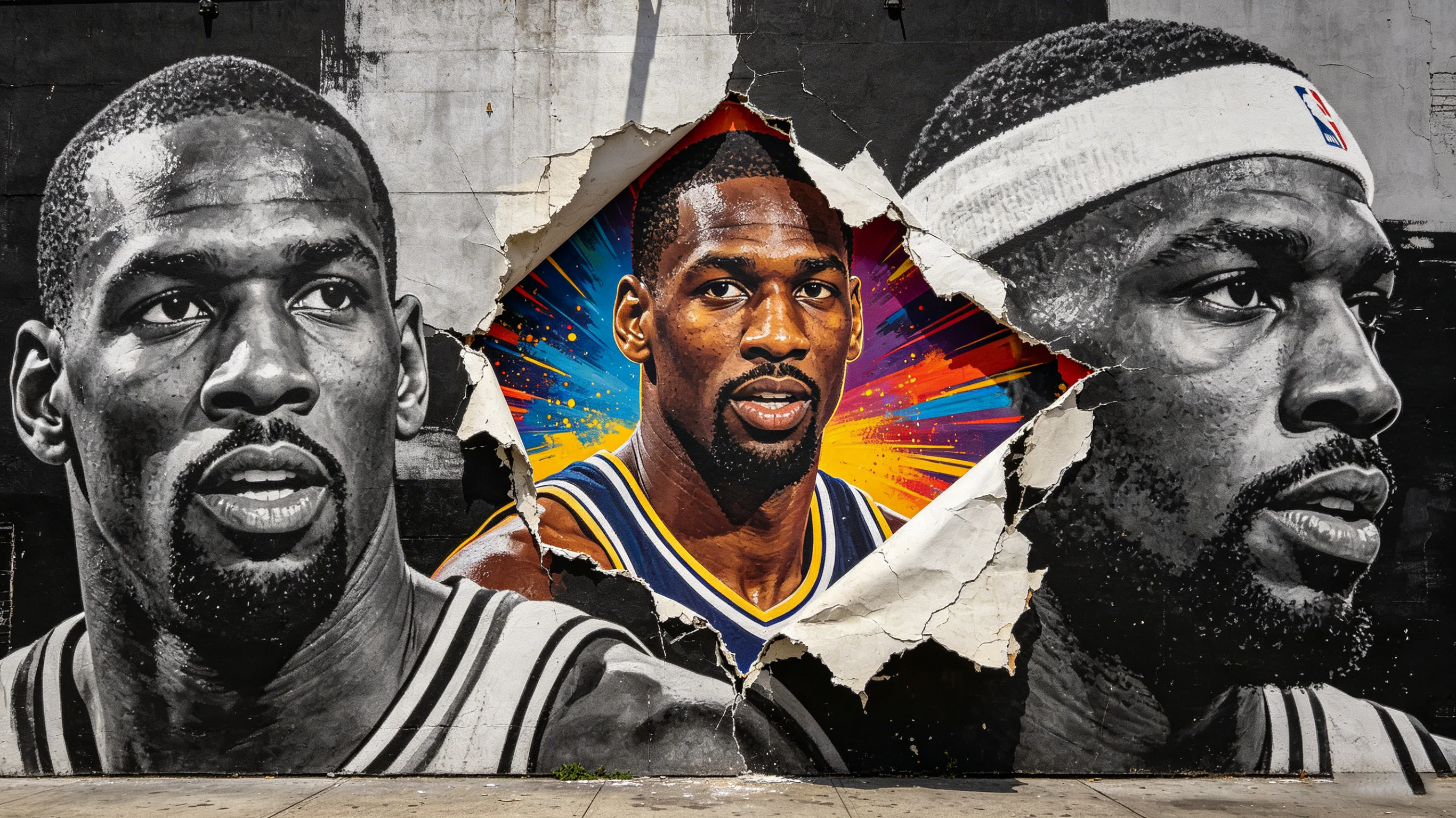
Every NBA era is defined by its signature faces. Michael Jordan, Kobe Bryant, LeBron James, and Stephen Curry each carved permanent places in basketball’s upper echelon, rewriting record books and redefining what superstar dominance looks like. Now, as James nears the final stretch of his historic career and Curry transitions into a veteran leadership role, the league’s generational handover is officially underway. The 2025–26 NBA season has served as a definitive coming-out party for the league’s next wave of elite talent, with a new crop of 23-to-28-year-old stars shedding “prospect” and “all-star” labels to emerge as legitimate championship anchors.
The question dominating league circles, media debates, and front-office conversations is no longer who will be the next star. It is who will evolve from All-Star caliber to legendary, cement Hall of Fame resumes and ultimately climb into the sport’s prestigious all-time top 10 hierarchy. Breaking into basketball’s elite historical tier has never been accidental. Per consistent ranking frameworks used by ESPN, The Athletic and mainstream NBA analysts, all-time greatness hinges on non-negotiable benchmarks: championship rings and Finals MVPs, regular-season MVP honors, sustained All-NBA recognition, statistical longevity and dominant playoff pedigree. Raw talent and highlight-reel plays are never enough. True legacy status is built on clutch high-stakes performance and multi-year supremacy over peer competition.
Among the current generation, no player sits closer to legacy status than Luka Dončić. At 26 years old, Dončić has already established himself as the most complete offensive playmaker of his era. His 2025–26 campaign represents the peak of his evolutionary growth, averaging 32.4 points, 8.6 rebounds and 8.1 assists per night while stringing together six consecutive 30-point triple-double performances — a new NBA record that surpasses Oscar Robertson’s historic milestone. Another First-Team All-NBA selection further solidified his standing as a nightly mismatch capable of dismantling any defensive scheme.
Dončić’s individual profile is undeniably historic. He has already eclipsed several LeBron James and Kevin Durant teenage and early-20s statistical benchmarks, blending elite isolation scoring, elite floor vision and unrivaled late-game initiation. Still, his all-time top-10 trajectory faces one critical roadblock: championship hardware. Despite consistent Western Conference contention, Dončić has yet to lift a title. Modern legacy evaluation leaves little room for stat-heavy, ringless resumes. For Dončić to separate himself from perennial All-Stars and join the sport’s elite historical list, he needs at least one championship and a Finals MVP in his prime window. The Mavericks’ aggressive offseason roster reshaping, pairing him with elite supporting talent, is explicitly engineered to help him clear that final hurdle.
Right behind Dončić in the generational race is Anthony Edwards, whose rapid ascent has become one of the league’s most compelling storylines. Now 24, Edwards completed his full superstar transformation in 2025–26. He averaged 27.6 points per game during the regular season, surpassed 10,000 career points to become the league’s third-youngest player to hit that mark, and took home All-Star Game MVP honors with a dominant high-scoring showcase. His playoff surge elevated his legacy even further, posting 31.2 points per postseason contest while leading Minnesota deep into the Western Conference finals.
Edwards embodies the modern two-way superstar prototype. His explosive athleticism, relentless driving ability and fearless crunch-time demeanor draw frequent comparisons to a prime Dwyane Wade. Unlike many perimeter-focused scorers, he competes with elite physical intensity on defense, disrupts passing lanes and locks down opposing primary creators. League scouts and analysts widely agree his ceiling places him among the rare breed of two-way generational wings. With continued development, a Finals breakthrough and a handful of signature individual awards, Edwards has a clear path to legendary status and a potential spot in the all-time top 10 conversation.
While Dončić and Edwards refine their superstar identities, Victor Wembanyama has already entered a stratagem few players in league history have ever touched. At just 22 years old, Wembanyama turned the 2025–26 season into a historic masterclass. He posted 28.5 points, 10.8 rebounds and 3.8 blocks per game, claimed both Regular Season MVP and Defensive Player of the Year honors, and became only the third player in NBA history to sweep both awards in the same campaign, joining Michael Jordan and Hakeem Olajuwon.
Wembanyama’s unique skill set defies traditional basketball archetypes. A 7-foot-3 frame paired with perimeter shooting, elite lateral movement and game-altering rim protection creates constant schematic chaos for opposing coaches. He impacts every possession on both ends, controls game tempo and elevates entire roster performance through pure presence. League insiders consistently label him the undisputed face of the NBA’s future. With his historic early-career award haul, Wembanyama’s top-10 trajectory is already locked in. All he requires is championship hardware to solidify himself as a future top-five all-time talent before he turns 30.
Beyond the league’s new Big Three, several other rising stars hover on the legacy fringe. Jayson Tatum, 28, already owns a championship ring and Finals MVP, with years of All-NBA credibility on his resume. Though often criticized for inconsistent playoff pacing, his two-way versatility and clutch pedigree keep him in the peripheral top-10 discussion. Another deep-ball playmaker, Trae Young, has evolved into one of the league’s most reliable high-volume scorers and facilitators, posting elite 29.8-point and 10.2-assist numbers this season. While lacking defensive prestige and championship success, his offensive dominance keeps him in the generational conversation.
Even rookie phenom Cooper Flagg has entered the discourse earlier than anyone anticipated. The 19-year-old 2025 first overall pick turned in one of the most polished rookie campaigns in modern history, averaging 21 points, 6.7 rebounds and 4.5 assists while leading his team in four major statistical categories — a feat previously only accomplished by Michael Jordan. His basketball IQ, defensive intensity and all-around poise far exceed typical teenage limitations, giving analysts reason to believe he could eventually grow into a generational talent with all-time legacy potential.
For all their upside, these young stars face unprecedented barriers to historical greatness. Western Conference congestion creates brutal annual playoff elimination scenarios, pitting Dončić, Edwards and Wembanyama against one another in must-win early-round matchups. Their high-volume, high-exertion playing styles also carry inherent injury risk, threatening the sustained peak longevity required for all-time prestige. Meanwhile, the standard for all-time top-10 placement continues rising every season, as vintage legends extend their record streaks and future classes arrive with higher athletic ceilings.
Legends are not born from talent alone. They are forged from consistent dominance, iconic playoff moments and championship validation. As the NBA’s old guard slowly fades, the league’s next dynasty builders are already standing at the doorstep. Wembanyama possesses the highest ceiling to become the era’s defining superstar. Dončić holds the most polished offensive resume. Edwards brings the most sustainable two-way energy. The next five seasons will decide which of these young talents transcend stardom, secure championship legacies and permanently cement their names among basketball’s all-time elite top 10.
Transparency Disclosure: Content here is for informational guidance. This publication maintains editorial independence, though some links may generate affiliate revenue. For copyright inquiries or content removal, please reach out to our desk.