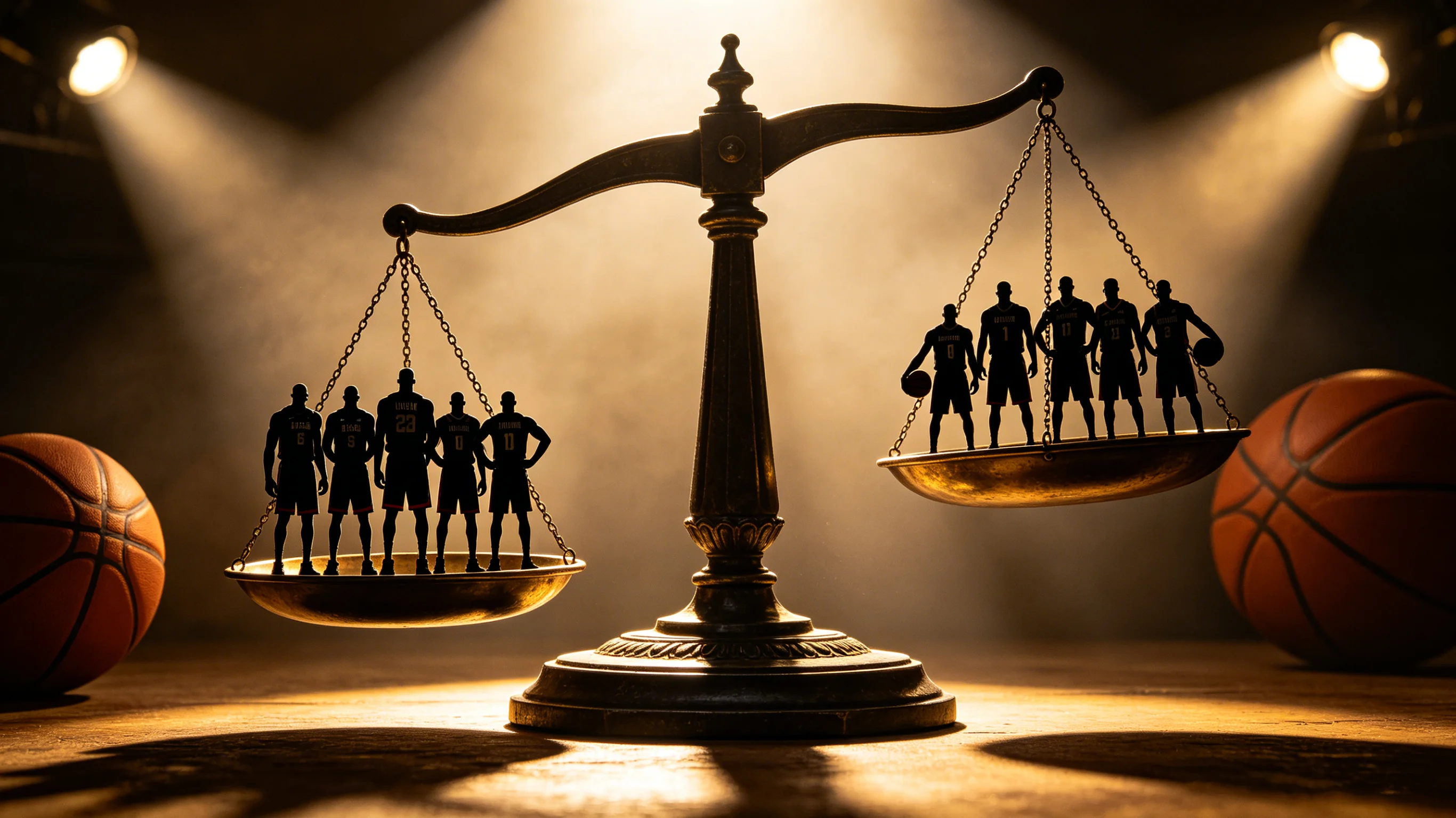
Team USA’s star-studded Olympic training camp squad has earned the nickname "the Avengers" across global basketball communities. Featuring legends LeBron James, Stephen Curry and Kevin Durant, alongside elite talents such as Joel Embiid, Jayson Tatum and Anthony Edwards, this roster ranks among the most formidable lineups in Team USA history, comparable to the iconic 1992 Dream Team and the 2008 Redeem Team.
Only 12 players can make the final tournament roster, which means fierce internal competition is inevitable. Several high-profile stars will be forced to miss out. Beyond the tough roster decisions, a heated debate has taken center stage. Can this all-NBA lineup dominate under FIBA’s unique rule set? When NBA-style gameplay and officiating are set aside, which player truly deserves the title of the world’s best basketball talent?
A Pleasant Dilemma for the Stacked Roster: Who Will Be Eliminated?
Team USA’s expanded training camp is filled with All-Star and All-NBA level players, presenting head coach Steve Kerr with a classic luxury problem. The full roster also includes Jaylen Brown, Donovan Mitchell, Trae Young, Jrue Holiday, Bam Adebayo, Anthony Davis, Tyrese Haliburton and Devin Booker.
Every position is deep in talent. Three core factors will determine the final cuts: overlapping positions, compatibility with the team-first system, and most importantly, each player’s adaptability to FIBA basketball.
Backcourt: Curry Secured, Tough Battle Between Booker and Haliburton
The backcourt sees the most intense competition, yet two spots are locked down from the start. Stephen Curry is a definite starter. His historic three-point shooting and off-ball movement become even more lethal with FIBA’s shorter three-point line, making him the perfect floor spacer for the team.
Jrue Holiday is another safe choice. As one of the league’s premier two-way guards, he specializes in defending opposing primary playmakers — an essential skill for physical international games.
The real contest is between Devin Booker, Tyrese Haliburton and Donovan Mitchell. Booker is an elite isolation scorer, but his ball-dominant style may lead to chemistry issues alongside ball-handling stars like Curry and James. Haliburton is a brilliant playmaker who excels at running offenses, yet his inconsistent defense makes him an easy target in physical FIBA matchups. Mitchell boasts explosive athleticism and relentless driving skills, though his streaky shooting struggles against crowded interior defenses overseas.
Most likely to be cut: Tyrese Haliburton. Kerr prioritizes two-way balance for international tournaments. Booker’s scoring punch and Mitchell’s defensive edge fit the system better, putting Haliburton on the bubble.
Wing Players: James and Durant Locked In, Tatum Under Pressure
The wing group is Team USA’s strongest unit. LeBron James and Kevin Durant have guaranteed spots. James’ all-around skill set, basketball IQ and clutch performances fit any system, acting as both the tactical and emotional leader.
Durant has long been hailed as the king of international basketball. His unguardable mid-range jump shots and physical advantages make him a reliable scoring threat that no overseas defense can fully contain.
Jayson Tatum, Jaylen Brown and Bam Adebayo are fighting for the remaining spots. Tatum is a proven All-Star and former Finals MVP, but his performance has fluctuated on the international stage, and he relies too much on isolation plays that Kerr tries to avoid. Jaylen Brown brings tough defense, great athleticism and solid off-ball scoring, blending seamlessly with James and Durant. Adebayo is a versatile two-way player who can shift between forward and center positions.
Most likely to be cut: Jayson Tatum. Adebayo’s defensive adaptability and Brown’s off-ball value suit Kerr’s team philosophy better, making Tatum the prime candidate for elimination among wings.
Frontcourt: Embiid the Undisputed Starter, Davis Faces a Tough Call
The frontcourt competition is relatively mild, but tough choices still remain. Joel Embiid is the clear starting center. Under FIBA rules with no defensive three-second violation, his dominant post game becomes even more overwhelming, establishing Team USA’s interior advantage.
The backup center spot comes down to Anthony Davis and Bam Adebayo. Davis possesses generational two-way talent, but his long injury history is a major concern. The high-intensity, condensed schedule of FIBA tournaments raises huge durability risks. In contrast, Adebayo enjoys better availability, flexible positioning and a team-first mentality.
Most likely to be cut: Anthony Davis. Considering health risks and overall system fit, Davis will probably be left off the final roster.
FIBA vs NBA: How Rule Differences Reshape Player Strengths
Team USA’s "Avengers" lineup is undoubtedly dominant under NBA rules, but FIBA adopts a completely different set of regulations. A shorter three-point line, no defensive three-second call, stricter traveling violations, heavier physical contact inside the paint, and greater emphasis on team ball movement have greatly changed the style of play.
Many NBA superstars struggle to adapt to FIBA rules, while international players thrive in this environment.
NBA elites all face obvious shortcomings overseas. LeBron James’ athleticism is affected by age, and the non-stop pace of FIBA games drains his stamina. Curry faces tighter physical defense that limits his off-ball movement. Even Durant encounters frequent double teams in crowded paint areas. As for Embiid, his slow foot speed gets exposed when defenders collapse inside without defensive three-second restrictions.
On the flip side, top international players show outstanding adaptability. Luka Dončić from Slovenia is a perfect fit for FIBA basketball. He averaged 27.0 points, 8.3 rebounds and 9.2 assists in the last World Cup, single-handedly leading his team past strong opponents. Nikola Jokić of Serbia excels at high-post playmaking and all-around scoring, thriving in FIBA’s team-oriented style. Shai Gilgeous-Alexander of Canada also proved his dominance, guiding his team to defeat Team USA in recent international competitions.
Who Is Truly the World’s Best Player Under FIBA Rules?
Beyond NBA fame, the race for the world’s best player is no longer a one-sided contest for Team USA. Luka Dončić, Nikola Jokić and Kevin Durant all have their own strengths, and their adaptability to FIBA rules decides who stands on top.
Luka Dončić: The Undisputed No.1 in FIBA Play
Luka Dončić is currently the clear-cut best player under FIBA rules. His playing style is tailor-made for international basketball: masterful tempo control, elite court vision, unanswerable mid-range scoring and solid all-around defense.
With no defensive three-second rule, the paint is always packed. Dončić does not need to drive deep into the interior. He can control the game through mid-range isolation and precise passing. He has no obvious weaknesses, and is capable of carrying a team to victory all by himself — an ability that even Team USA’s stars cannot match.
Nikola Jokić: The Most Dominant Big Man in FIBA
Nikola Jokić ranks right behind Dončić as another top contender. His high-post playmaking, basketball IQ and versatile skills work wonders in FIBA’s team system.
He does not rely on post-up plays to make an impact. Just by standing at the high post, he can create scoring chances for teammates and knock down shots from multiple areas. Though not a fierce shot-blocker, he uses his physicality and experience to contain opposing big men effectively.
Kevin Durant: The Ultimate Scorer on the International Stage
Kevin Durant has earned the reputation as the king of international basketball. His combination of height, wingspan and smooth jump shots makes him an ultra-reliable scorer. The shorter three-point line also amplifies his offensive advantages.
Even so, he has clear limits. Durant lacks elite playmaking ability and struggles to run an entire offense. He is a fantastic closer, but not a full-time team architect, which keeps him from claiming the top spot.
Conclusion: Hidden Worries Behind the Super Roster, A New World No.1 Emerges
The upcoming roster cuts for Team USA essentially come down to judging players’ adaptability from NBA styles to FIBA rules. Haliburton, Tatum and Davis are the most likely players to be eliminated. Steve Kerr will finalize a roster with better two-way balance and higher system compatibility.
When playing by FIBA rules, the title of the world’s best is no longer exclusive to American players. Thanks to his perfect style fit and proven leadership, Luka Dončić stands alone as the current world’s top talent. Nikola Jokić follows closely as the most dominant interior force. Despite his reputation as an international scoring machine, Kevin Durant cannot surpass them due to his limited playmaking.
Team USA remains the overwhelming favorite to win the Olympic gold with their deep talent pool. However, Slovenia led by Dončić and Serbia built around Jokić are fully capable of upsetting the favorites. NBA achievements do not equal international dominance. When measured by performance under FIBA rules, a new global basketball king has arrived.
Transparency Disclosure: Content here is for informational guidance. This publication maintains editorial independence, though some links may generate affiliate revenue. For copyright inquiries or content removal, please reach out to our desk.