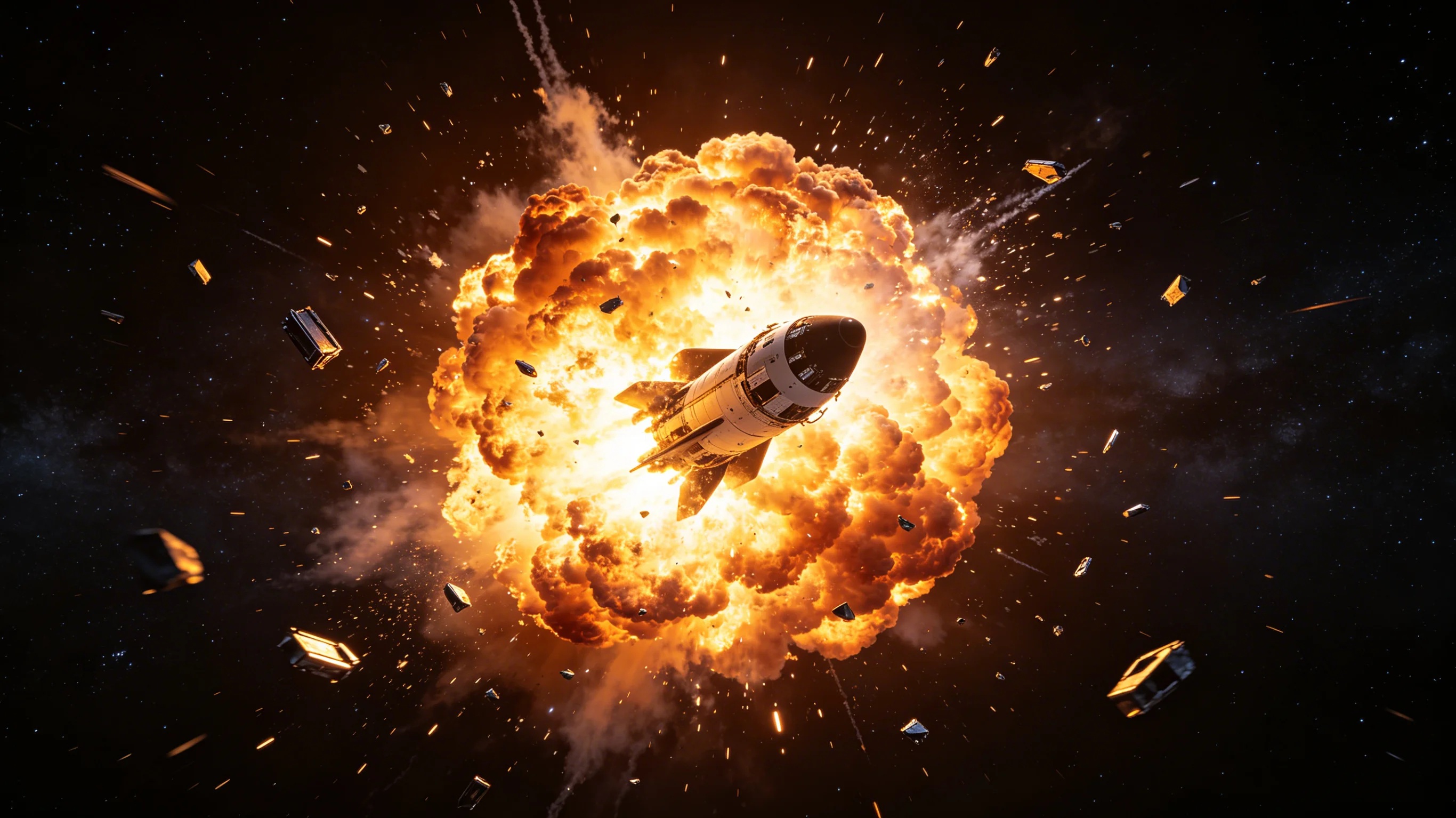
These spectacular failures are far from isolated accidents. From Starship’s long string of explosive test flights to New Glenn’s ground test mishaps and NASA’s costly struggles with the Space Launch System, a harsh reality defines today’s commercial space race. Every major technological leap for heavy-lift rockets comes at the price of what the industry grimly calls “hundred-million-dollar fireballs.” Progress is forged directly from the rubble of high-stakes failures.
Heavy-Lift Rockets: The Ultimate Ticket — and Cost Sink — for Commercial Space
Heavy-lift rockets, defined as launch vehicles capable of hauling more than 50 metric tons to low Earth orbit, represent the gold standard of modern space infrastructure. They enable crewed lunar missions, Mars settlement plans and the deployment of massive satellite constellations. Simply put, they separate niche aerospace research from a fully industrialized space economy.
SpaceX’s Starship is engineered to carry 150 tons to orbit in reusable configuration, and up to 250 tons for one-off missions. Blue Origin’s New Glenn targets a 70-ton payload capacity, while NASA’s SLS remains the most powerful operational rocket with a 130-ton lift rating. All of them share one unshakable trait: extraordinary costs.
Public filings show SpaceX has poured over $15 billion into the Starship program, with another $930 million spent just in the first quarter of 2026. To date, the vehicle has yet to complete a fully successful orbital test flight. A single New Glenn rocket carries a price tag exceeding $500 million, and the recent test failure alone resulted in roughly $300 million in direct losses. Investigations and rebuilds will add hundreds of millions more. NASA’s SLS is even more expensive, with each launch averaging $4 billion.
So why keep chasing these behemoths despite the staggering price tag? The business case is straightforward. Ultra-heavy payload capacity drives down per-kilogram launch costs and turns space travel into a scalable industry. SpaceX’s core vision is to operate Starship like a commercial airliner, slashing launch expenses from thousands of dollars per kilogram to just a few dozen. That transformation is essential for global satellite networks, space tourism and long-term Mars colonization — and heavy-lift rockets are the only viable path forward. Accepting costly failures has become an unavoidable part of the process.
Pushing Physical Limits: Why Catastrophic Failures Are Almost Inevitable
Developing a modern heavy-lift rocket is an extreme engineering challenge where even the smallest error triggers total failure. Every component operates on the absolute edge of physical endurance.
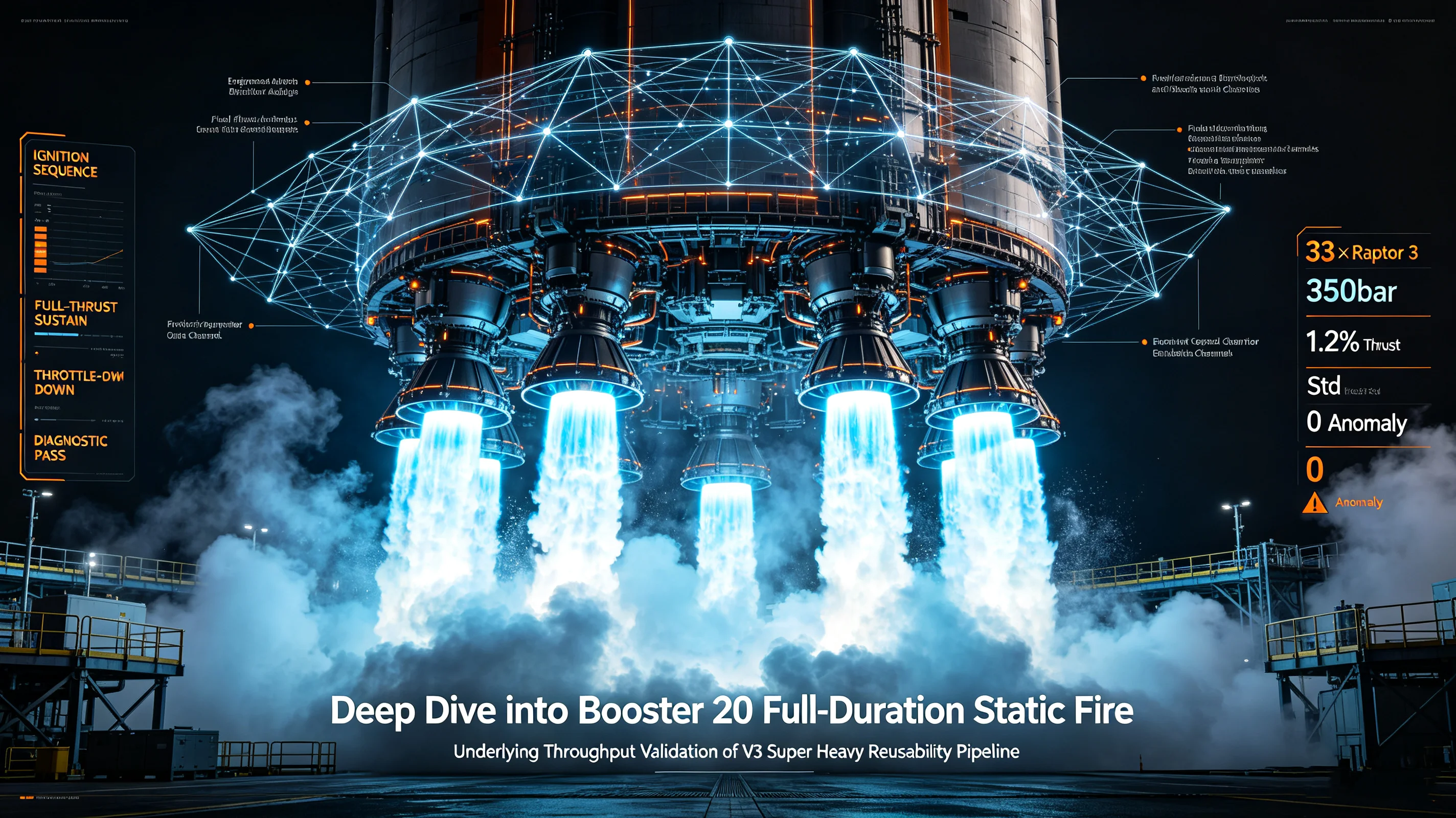
Propulsion systems stand as the biggest hurdle. Starship uses 33 Raptor engines firing simultaneously, each generating 280 tons of thrust. Synchronizing dozens of powerful engines leaves zero margin for error; a single malfunction can destabilize the entire vehicle. Blue Origin relies on the BE-4 liquid oxygen and methane engine, a complex piece of hardware that costs more than $20 million apiece. Cryogenic fuels sitting at minus 162 degrees Celsius make metal components brittle. Tiny cracks in pipelines or valves, invisible on the ground, turn into explosive hazards the moment ignition begins.
Structural integrity and thermal protection present equally deadly risks. Starship stretches 120 meters tall with a 9-meter diameter and a liftoff mass above 5,000 tons. During flight, the frame endures intense vibration and multiple G-forces. Upon re-entry, surface temperatures surge past 1,000 degrees Celsius. To cut weight and boost payload capacity, engineers trim structural margins, which increases vulnerability. Its silicon carbide heat shield tiles cost over $100,000 each, and a single missing tile can lead to complete destruction during re-entry.
Complexity compounds these risks exponentially. A heavy-lift rocket consists of millions of individual parts across dozens of interconnected subsystems covering propulsion, navigation, communication and flight control. Aerospace teams abide by a tough version of Murphy’s Law: anything that can go wrong will go wrong, and it will happen at the worst possible moment. Starship’s early test flights failed for entirely new reasons each time — engine malfunctions, fuel leaks, separation errors and heat shield damage. In this field, success during early testing is the exception, and dramatic failure is the rule. Those costly fireballs are a natural outcome of pushing engineering boundaries.
Agile Iteration: Turning Controlled Failures Into Disruptive Success
Traditional government space programs built rockets around one core principle: zero failures. Development cycles stretched for a decade or longer, with exhaustive testing to eliminate all risk. Commercial space operators have discarded that model entirely. Their winning formula is rapid iteration and controlled risk-taking: accept short-term massive losses to unlock long-term market dominance.
SpaceX embodies this philosophy fully. Elon Musk has openly stated that Starship does not need perfect flights from day one. Every explosion is a data point that fixes one critical flaw. Its first test revealed flaws in engines and launch infrastructure. The next resolved engine issues but failed at stage separation. Each subsequent flight targeted the next weak link. This “test fast, fix fast” approach delivers dramatic progress in just three years. By comparison, NASA’s SLS spent 12 years reaching its maiden launch and remains fully expendable.
Blue Origin follows the same playbook. Ground static fire tests are intentionally designed to expose hidden dangers on Earth, rather than letting them become lethal problems mid-flight. Following the New Glenn incident, Jeff Bezos reaffirmed his commitment to the program. The setback was painful, yet necessary. In commercial heavy-lift rocketry, teams face a clear choice: absorb the cost of high-profile failures, or walk away from the race entirely.
The long-term business math justifies the risk. A fully operational heavy-lift rocket grants near-monopoly control over high-value launch contracts, satellite constellations and deep-space missions. A mature Starship could capture over 80% of the global heavy-lift launch market, potentially generating $50 billion in annual revenue. A successful New Glenn is poised to handle all launches for Amazon’s Project Kuiper satellite network, a deal worth more than $10 billion. For industry leaders, these fireballs are not just losses — they are expensive entry tickets to a multi-trillion-dollar space economy.
Industry Consolidation: Only the Deepest Pockets Survive
This high-risk, high-cost environment is rapidly reshaping the competitive landscape. Today, only two private companies worldwide remain fully committed to heavy-lift rocket development: SpaceX and Blue Origin. Most smaller aerospace firms have stepped back. European launch startup Isar Aerospace and U.S. firm Relativity Space both hit major technical and financial walls after destructive test failures, forcing them to scale back or pause flagship projects.
The dividing line is simple: capital reserves. SpaceX has secured more than $30 billion in total funding, backed by Musk’s immense personal wealth. Blue Origin receives over $5 billion in annual investment from Bezos. This financial buffer lets them absorb repeated hundreds-of-millions-dollar failures and keep iterating. For smaller competitors, one major explosion can drain all available capital and end their ambitions overnight.
This gap will only widen. Development costs and failure risks keep rising, creating an arena where only the wealthiest, most resilient teams can compete. The era of dozens of startups chasing heavy-lift glory is ending. A small group of well-funded leaders will define the next chapter of human spaceflight.
Beyond the Flames Lies the Final Frontier
The road to reliable commercial heavy-lift rocketry is paved with costly fireballs. Unforgiving engineering limits, enormous price tags and cutthroat competition make repeated failures inevitable.
Yet every detonation carries purpose. Starship’s setbacks bring humanity closer to sustainable Mars habitation. New Glenn’s struggles lay the groundwork for next-generation global satellite networks. Each expensive lesson pushes aerospace technology forward and turns the once-distant final frontier into a tangible reality.
For the commercial space sector, these fireballs are not dead ends. They are mandatory milestones on the journey toward the stars. Companies brave enough to embrace failure, invest relentlessly and iterate quickly will write the next page of space history. Those unwilling to pay the price will simply be left behind.
Transparency Disclosure: Content here is for informational guidance. This publication maintains editorial independence, though some links may generate affiliate revenue. For copyright inquiries or content removal, please reach out to our desk.