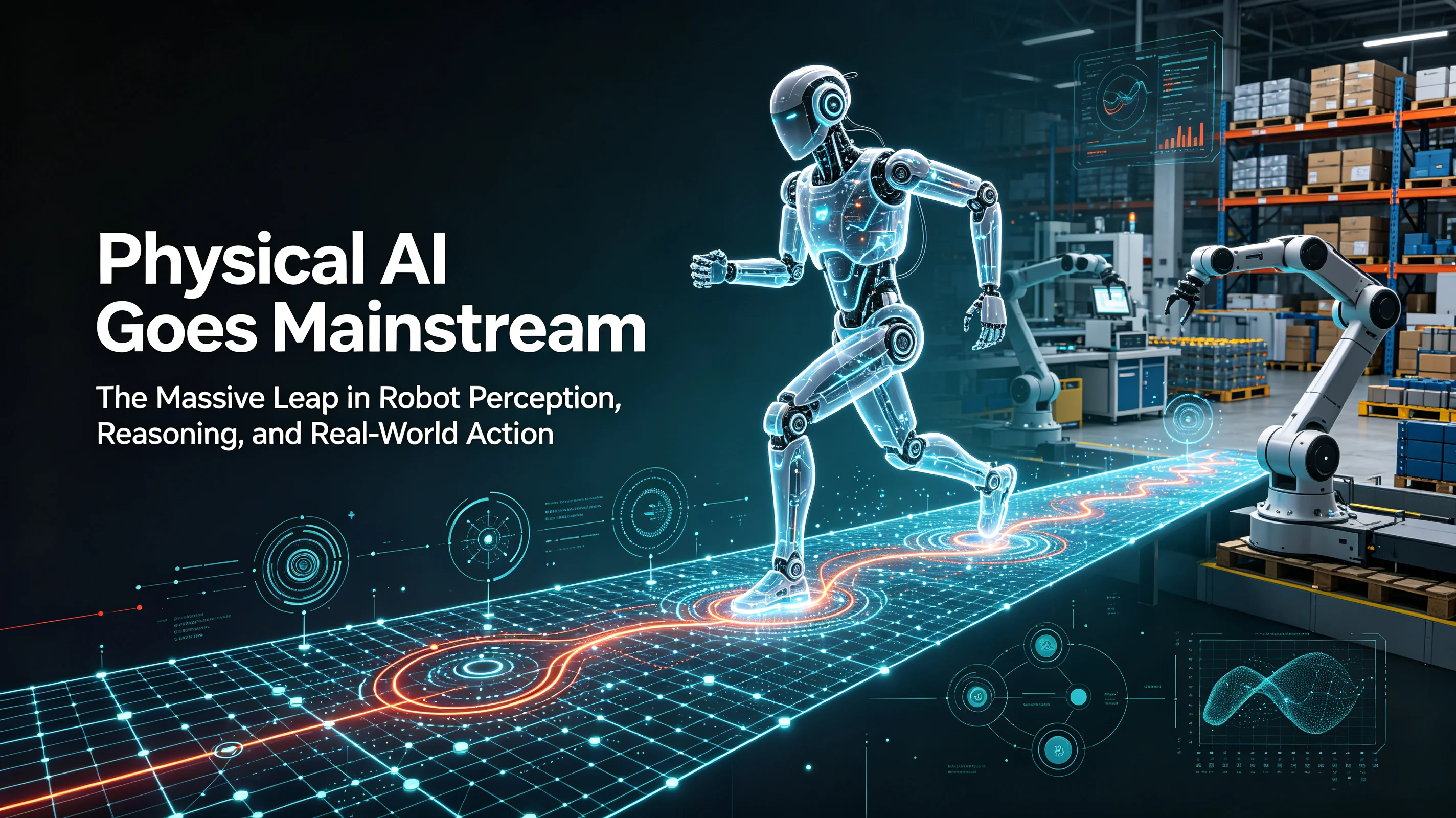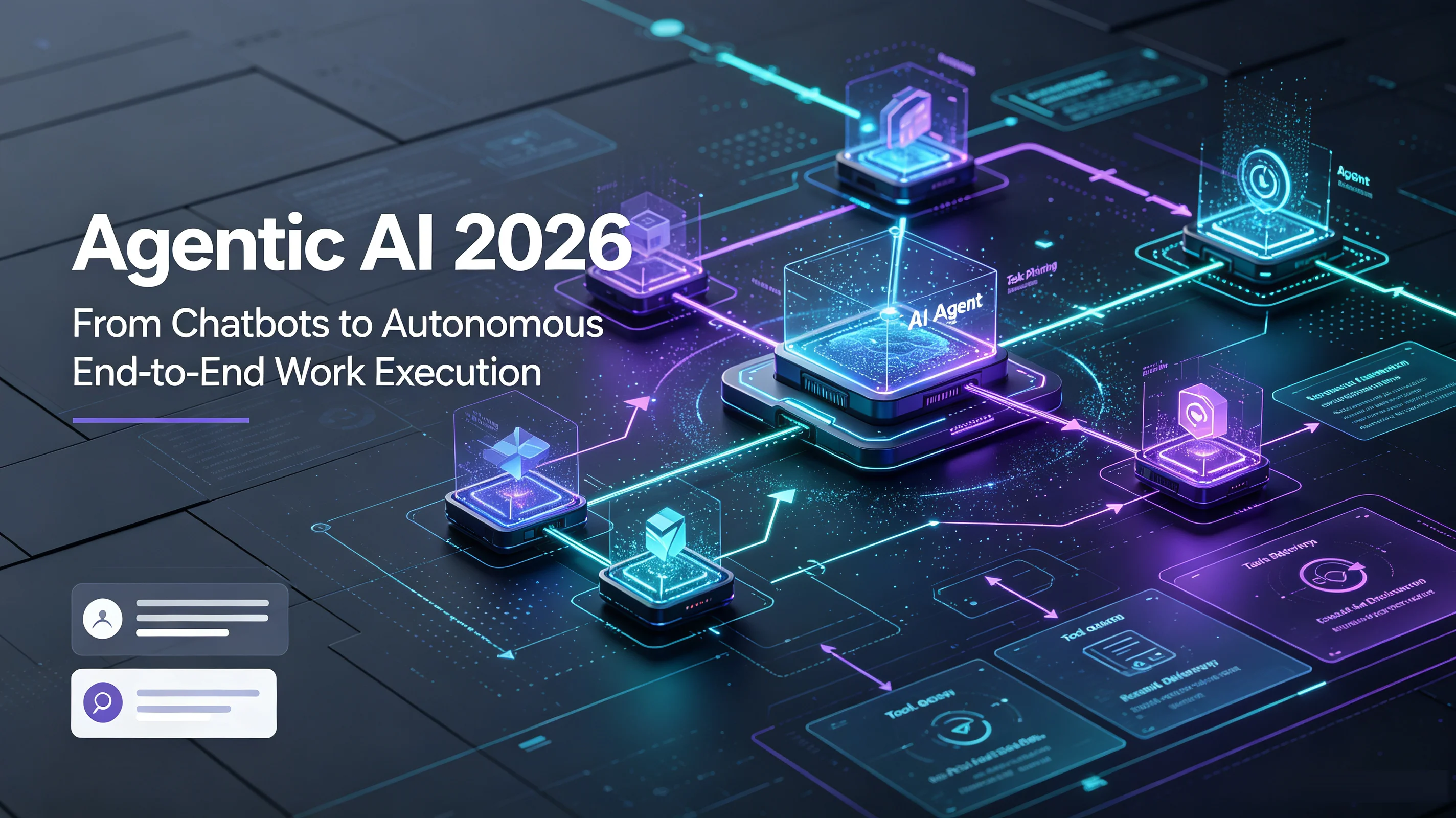
In 2026, artificial intelligence is rapidly moving beyond answering questions to independently executing complex workflows. Agentic AI—once framed as a conversational novelty—has evolved into autonomous systems that perceive environments, plan actions, invoke tools, run multi‑step tasks, and self‑improve in real time. This shift is rewriting enterprise operations, with software development leading the global adoption wave.
The Core Leap: From Response to Autonomous Execution
Traditional generative AI reacts to prompts, generating text or code snippets. Agentic AI adds agency: it decomposes ambiguous goals, selects APIs, databases, browsers, or terminals, acts in live environments, adapts to feedback, and delivers finished outputs.
McKinsey’s 2026 Global AI Survey underscores the momentum: 40% of large enterprises (annual revenue over $1B) are scaling AI agents, up from 27% a year ago. Adoption among software coding agents is even higher. Databricks reports that multi‑agent systems surged 327% in under four months, as firms abandon standalone chatbots for collaborative, multi‑agent architectures.
Real‑world impact is tangible. Pharmaceutical companies use agents to run full drug repurposing pipelines—literature review, compound screening, molecular simulation, and regulatory drafting—cutting a 12‑person, six‑month project to a fraction of the time. Logistics providers have reduced customs documentation from three days to 40 minutes.
Software Development Emerges as the Pioneer Use Case
Coding has become the most mature arena for agentic AI. Developers no longer rely on basic autocompletion; they assign entire tasks to agents: understanding repository structure, planning changes, writing and testing code, debugging failures, submitting pull requests, and iterating fixes autonomously.
Leading tools include Claude Code, OpenAI Codex, Cursor Agent Mode, and Devin. These platforms support long‑context repo understanding, terminal access, and self‑correction loops. Top models now hit 80%–90% success rates on benchmarks like Terminal‑Bench and OSWorld—a dramatic jump from 12 months prior. At Google and other tech giants, AI‑generated code exceeds 50% of new production code, reviewed and shipped by engineers.
A structural shift is underway: 32% of enterprises report building internal agents instead of buying third‑party software or features. The model is moving from “purchasing tools” to “building tools quickly with agents.”
Scaling Challenges: Hype vs. Production Reality
Despite widespread experimentation, deployment in production remains limited. About 79% of companies are piloting or adopting agentic AI, but only 11%–15% have scaled it. Successful deployments deliver an average ROI of 171% (192% in the U.S.). Yet Gartner forecasts more than 40% of agent projects will be canceled by late 2027.
Key barriers:
Business workflows not redesigned for agents
Poor data quality and governance
Lack of robust orchestration capabilities
Unresolved agent identity and permission management
Research from UiPath and Deloitte confirms that firms with mature orchestration layers achieve 89% ROI compliance—far above the average.
The Future: Human‑Agent Collaboration as the New Normal
Industry experts agree that over the next 2–4 years, enterprises will redesign roughly half their processes around agents. Most scenarios will use human‑in‑the‑loop supervision, not full autonomy. High‑performance organizations are already building “agent engineering” capabilities: structuring institutional knowledge, establishing evaluation frameworks, and integrating agents into daily operations.
Agentic AI’s rise is more than a technical upgrade—it is a reimagining of work itself. The shift from chat to end‑to‑end autonomy is creating a new productivity unit: one person + a fleet of agents. Businesses that resolve governance and workflow frictions fastest will turn this potential into durable competitive advantage.
Transparency Disclosure: Content here is for informational guidance. This publication maintains editorial independence, though some links may generate affiliate revenue. For copyright inquiries or content removal, please reach out to our desk.