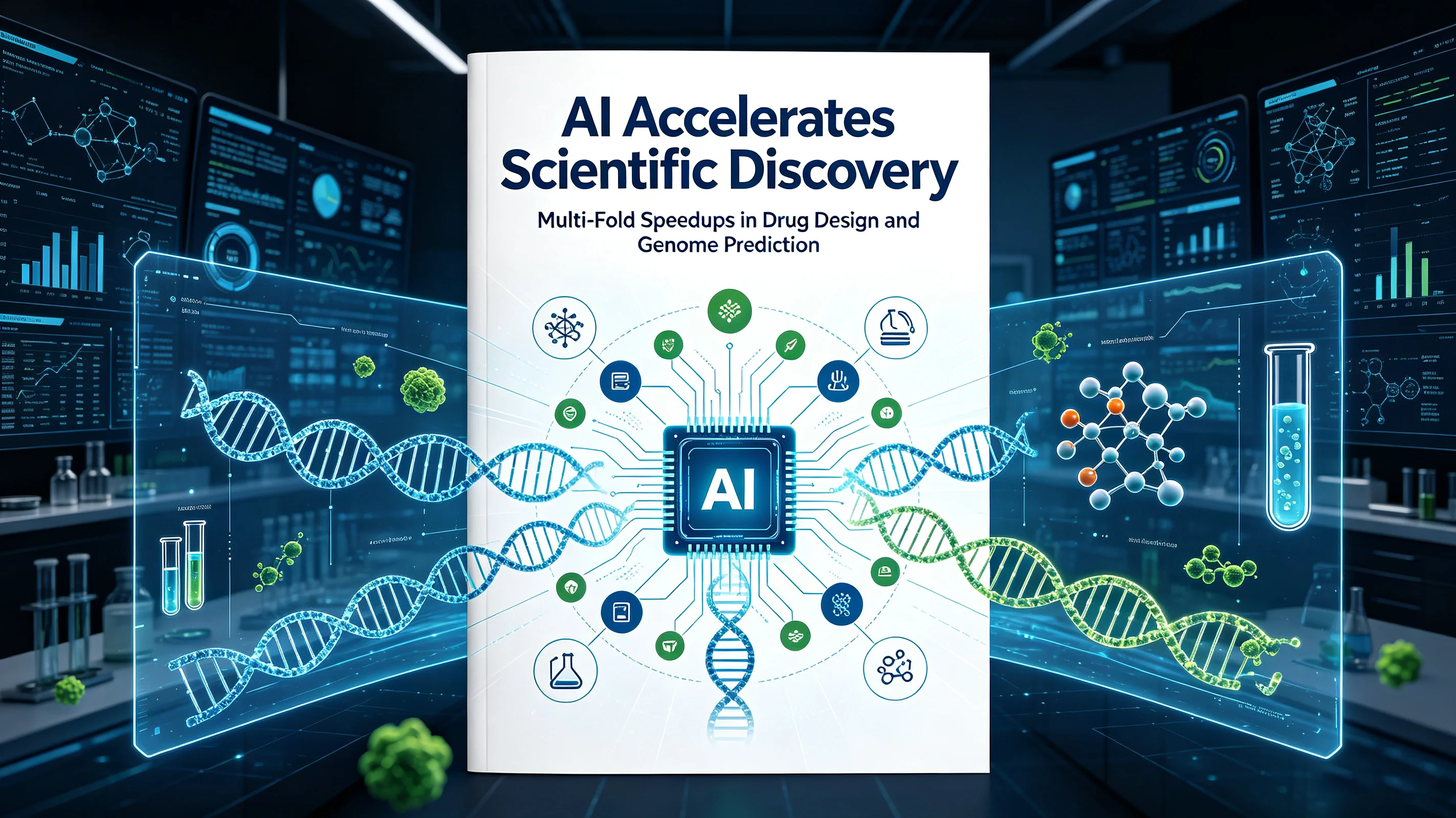
In 2026, artificial intelligence has evolved from a supportive research tool into a core engine powering modern scientific discovery. Across drug development and genomic research, AI is drastically compressing traditional experimental timelines, turning analytical work that once took years—or was once unfeasible—into instant, accessible computational resources. The most transformative breakthroughs this year are concentrated within these two high-impact fields.
Genome Prediction’s Full-Atlas Era: The Launch of Google DeepMind’s AlphaGenome Atlas
On September 8, 2026, Google DeepMind unveiled the AlphaGenome Atlas, the most comprehensive predictive catalogue of human genomic variant effects to date. Built upon its 2025 AlphaGenome model, the resource precomputes the molecular impact of all 9 billion possible single-nucleotide variants across the human genome—covering every possible single-letter DNA substitution—yielding a dataset of approximately 1 petabyte (PB). This represents a more than 30-fold increase in scale compared to the landmark AlphaFold database.
Prior to this launch, researchers were required to run complex, custom-built models individually for each genetic variant, a process that posed high technical barriers and consumed extensive research time. The AlphaGenome Atlas eliminates these barriers entirely. Its browser-based portal requires no coding expertise, enabling researchers to instantly query the predictive effects of any variant across hundreds of human cell types and tissues. The platform delivers granular insights into core biological processes, including gene expression dynamics, chromatin accessibility, and splicing site regulation.
Central to the platform’s utility is the AlphaGenome Variant Impact (AVI) score, a unified numerical metric that enables researchers to rapidly distinguish pathogenic mutations from benign genetic variations.
Real-world research applications have already demonstrated the atlas’s transformative value. A team at the Broad Institute leveraged AVI scoring to prioritize elusive non-coding variants in unsolved rare disease cases, successfully identifying a DNM1 gene variant linked to epileptic encephalopathy. For complex human traits such as body mass index (BMI), targeted analysis of high-impact genetic variants has uncovered previously overlooked genetic associations.
Most notably, the atlas brings the genome’s “dark matter”—the 98% of non-coding DNA long considered inaccessible to systematic study—into full analytical view. This capability is accelerating mechanistic disease research and streamlining the identification of actionable targets for precision medicine.
Drug Design: From Years of Work to Hours of Computation
In pharmaceutical R&D, AI has advanced far beyond generating candidate molecules, evolving into a fully autonomous end-to-end discovery pipeline.
Insilico Medicine’s lead candidate drug rentosertib stands as a landmark achievement in AI-driven therapeutics. The TNIK inhibitor, developed entirely via generative AI for idiopathic pulmonary fibrosis (IPF), is the first clinical-stage drug with both an AI-discovered biological target and an AI-designed molecular structure. Phase 2a trial results published in 2025 confirmed significant clinical benefits: patients treated with rentosertib saw an average 98.4 mL improvement in forced vital capacity, while the placebo group experienced a 20.3 mL decline. In 2026, the therapy entered Phase III global trials, with emerging data indicating it also modulates multiple aging biomarkers, suggesting potential anti-aging therapeutic applications. Beyond flagship drug development, the company’s MMAI Gym framework hosts a suite of specialized domain-specific AI models that outperform or match conventional tools across 70+ pharmaceutical chemistry benchmark tests.
Multi-agent AI systems are further amplifying research efficiency across the industry. Platforms including FutureHouse’s Robin and Kiin Bio’s virtual scientist ecosystem automate the full spectrum of preclinical workflows: literature review, multi-omics data analysis, protein structural modeling, and novel molecular generation. Research workflows that once required teams of scientists two to three weeks to complete can now be finalized in mere hours. These AI systems have already generated validated novel therapeutic targets and repurposed drug candidates for further development.
McKinsey industry analysis confirms that 75% to 85% of biopharma workflows contain tasks amenable to significant AI agent augmentation. In early-stage drug discovery, intelligent AI systems can unlock 21% to 30% additional scientific productivity, empowering research teams to expand therapeutic pipelines and accelerate the clinical progression of candidate drugs. Industry and academic collaborations further show that AI models trained on proprietary protein structure data consistently outperform tools limited to public datasets in protein-ligand interaction prediction.
Transformative Progress and Persistent Industry Challenges
AI is fundamentally reshaping the logic of biomedical R&D. The traditional linear, stage-gated research model is being replaced by an AI-powered closed-loop system of continuous learning: automated hypothesis generation, computational prediction, experimental validation, and real-time iterative refinement. Accelerated advances in genomics and drug design are also creating ripple effects across the life sciences, optimizing clinical trial design, enabling novel biomarker discovery, and advancing personalized patient therapy.
Despite rapid progress, critical bottlenecks remain. All AI-generated predictions require rigorous wet-lab experimental validation, and translating preclinical computational insights into safe, effective human clinical outcomes remains the industry’s greatest challenge. Additionally, persistent gaps in data quality, limitations in model interpretability, and evolving regulatory frameworks continue to constrain large-scale industrial adoption. While only a small number of AI-native drugs have advanced to late-stage clinical trials or received official approval, the global pipeline of AI-discovered therapeutics is expanding at exponential speed.
As of 2026, AI has transitioned from a mere acceleration tool to an active collaborative partner in scientific discovery. Comprehensive genomic variant mapping and fully reconstructed AI drug design pipelines are compressing the timelines of basic biological research and pharmaceutical development by multiple folds. Moving forward, research teams that successfully integrate AI predictive modeling with iterative experimental validation will secure a decisive competitive edge in deciphering human biology and developing life-saving disease therapies.
Transparency Disclosure: Content here is for informational guidance. This publication maintains editorial independence, though some links may generate affiliate revenue. For copyright inquiries or content removal, please reach out to our desk.